


Written by Dr. Juan Carlos Perez
Dr. Juan Carlos Perez Rodriguez
Spine surgeon · Published co-author in Brain and Spine (EANS), 2026
SpineAx - Spine surgery & comprehensive pain care
In alliance with Praesenti
Bogota, Colombia
Last medically reviewed: August 26, 2026
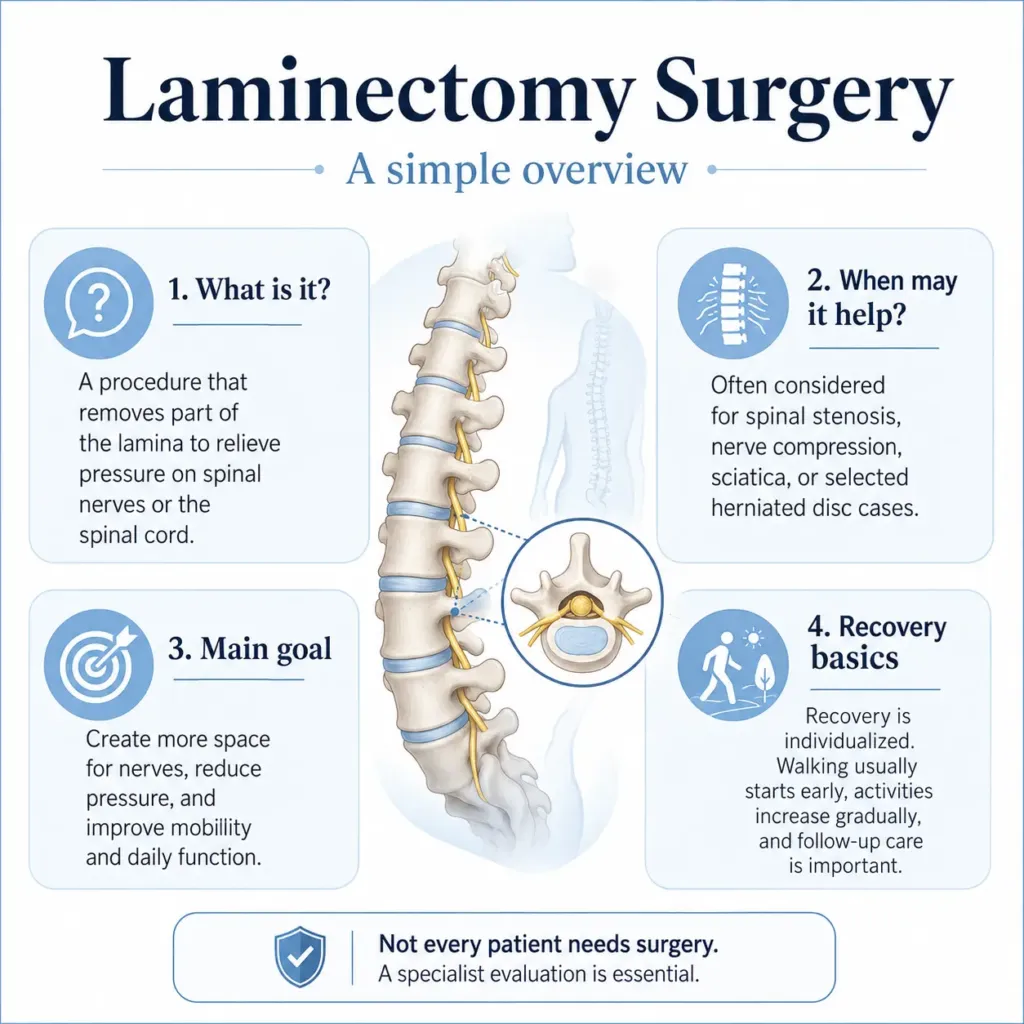
Laminectomy surgery is a spinal decompression procedure that removes part of the lamina, the bony arch of a vertebra, to relieve pressure on the spinal nerves or spinal cord and create more space within the spinal canal. The exact approach depends on the area affected, the cause of compression, and each patient’s individual condition.
Living with persistent back or neck pain, numbness, weakness, or difficulty walking can make everyday life feel increasingly limited, especially when surgery has already been mentioned as a possible next step. At SpineAx, we know that hearing the words laminectomy surgery can raise more questions than answers.
In this guide, we explain when a laminectomy may be recommended, how the procedure is performed, the potential risks and benefits, what recovery may look like, and what outcomes patients can reasonably expect. We also address options for those considering spine surgery abroad, including receiving specialized care in Colombia. At SpineAx, we provide personalized evaluations for international patients who want to understand whether laminectomy surgery in Colombia may be appropriate for their case.
Considering laminectomy surgery?
Talk to our spine specialists in Colombia and receive a personalized evaluation of your case.
What Is Laminectomy Surgery and How Can It Relieve Pressure on Your Spine?
When a nerve or the spinal cord is compressed, the problem is not always the nerve itself—it is often that there is simply not enough space around it. At SpineAx, we explain a laminectomy as a procedure designed to create that space. During laminectomy surgery, part of the lamina—the bony structure forming the back portion of a vertebra—is removed to reduce pressure on the neural structures. Depending on the location and cause of the compression, this can help relieve symptoms such as radiating pain, numbness, weakness, or difficulty walking.
The goal is not simply to remove bones. The goal is to perform a carefully planned spinal decompression surgery that addresses the structure responsible for the patient’s symptoms while preserving as much spinal stability as possible.
Why Removing Part of the Vertebra Can Give Compressed Nerves More Space
Think of the spinal canal as a protected passageway where the spinal cord and nerves travel. When that space becomes narrower because of degenerative changes, thickened ligaments, bone overgrowth, disc-related problems, or other conditions, the nerves may become compressed.
During a decompressive laminectomy, we remove the portion of bone necessary to enlarge that space and relieve pressure on the affected neural structures. Depending on what we find in the patient’s imaging studies and clinical evaluation, additional tissues contributing to the compression may also need to be addressed.
In simple terms, the procedure seeks to:
- Create more room for the spinal cord or affected nerves.
- Reduce mechanical pressure on neural structures.
- Improve symptoms caused by nerve compression.
- Preserve spinal function and stability whenever possible.
Clinical takeaway:
A laminectomy treats compression, not every type of back or neck pain. That is why identifying the exact source of symptoms before recommending surgery is essential.
Lumbar Laminectomy: When the Problem Is Affecting Your Lower Back and Legs
A lumbar laminectomy surgery is performed in the lower part of the spine. Compression in this area can affect the nerves that travel toward the hips and legs, so patients may experience much more than localized lower back pain.
Common symptoms that may lead us to evaluate a patient for lumbar decompression include:
- Pain that travels from the lower back into one or both legs.
- Numbness or tingling in the legs or feet.
- Weakness that affects mobility.
- Difficulty standing or walking for longer periods.
- Symptoms are associated with narrowing of the spinal canal.
One of the conditions commonly associated with lumbar decompression is spinal stenosis. However, the presence of stenosis on an MRI does not automatically mean surgery is necessary. At SpineAx, we consider the patient’s symptoms, neurological examination, imaging findings, previous treatments, and overall health before determining whether lumbar laminectomy surgery is an appropriate option.
Cervical Laminectomy: When Compression Affects the Neck and Spinal Cord
A cervical laminectomy surgery is performed in the neck, where compression can involve the spinal cord itself. Because of this, symptoms may look different from those caused by lumbar compression.
In some patients, cervical spinal cord compression can cause problems with balance, hand coordination, weakness, or walking. These neurological symptoms require careful evaluation because the objective of cervical laminectomy surgery may be not only to reduce pain, but also to decompress and protect the spinal cord.
Is Every Laminectomy Performed the Same Way?
No. Laminectomy surgery is not a one-size-fits-all procedure. The surgical approach depends on where the compression is located, how many spinal levels are involved, the patient’s anatomy, the stability of the spine, and the underlying condition.
A patient may be considered for:
- Decompressive laminectomy: removal of the necessary portion of the lamina to relieve pressure on neural structures.
- Minimally invasive laminectomy: decompression performed through a smaller surgical approach in appropriately selected patients.
- Laminectomy combined with other procedures when additional decompression or stabilization is required.
A minimally invasive laminectomy can be an excellent option in selected cases, but a smaller incision does not automatically make it the right operation for every patient. At SpineAx, our priority is to choose the technique that provides the appropriate decompression for the individual condition, rather than selecting an approach based only on how it is labeled.
The most important question is not “Which laminectomy is better?” but “Which surgical approach best addresses the compression affecting my spine?”
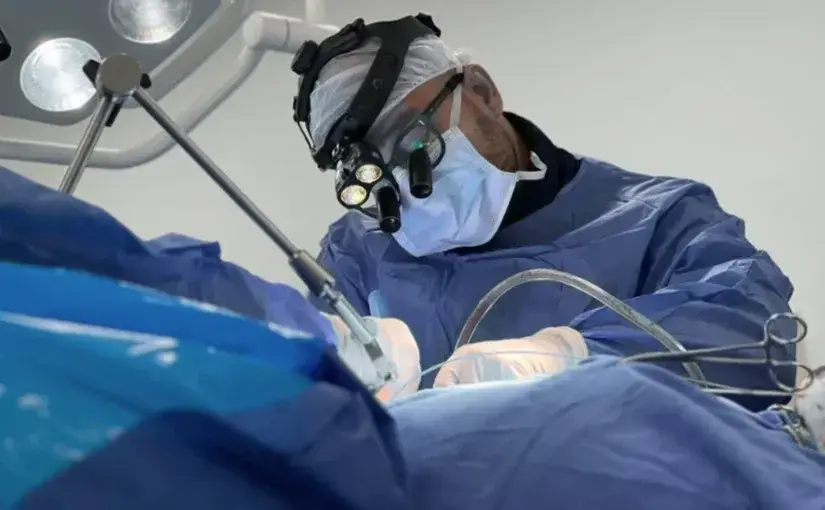
When Is Laminectomy Surgery Recommended—and When Might You Not Need It?
Being told that you have spinal stenosis, a herniated disc, or nerve compression does not automatically mean you need surgery. At SpineAx, we make that distinction very clear. We consider laminectomy surgery when the symptoms, neurological findings, and imaging studies point to a specific area of compression—and when that compression is significantly affecting function, mobility, or quality of life.
Our decision is never based on an MRI alone. We look at the whole picture: what you feel, how long you have had symptoms, whether they are progressing, what your examination shows, what treatments you have already tried, and what your images reveal.
Spinal Stenosis: When Narrowing Begins to Affect Your Nerves and Daily Life
Spinal stenosis occurs when the space available for the spinal cord or nerve roots becomes narrower. In the lumbar spine, this narrowing can cause pain, numbness, weakness, or heaviness in the legs—particularly when standing or walking. Some patients notice that they can walk only a certain distance before they need to sit down or lean forward.
When these symptoms become persistent or progressively interfere with daily activities, a laminectomy for spinal stenosis may be considered to create more room for the compressed nerves. In selected patients, laminectomy surgery for spinal stenosis becomes part of the treatment plan after conservative options are no longer providing enough relief.
For us, the important question is not simply whether stenosis appears on an MRI, but whether the narrowing actually explains the patient's symptoms.
We may consider surgical decompression when:
- Walking or standing has become increasingly difficult.
- Leg pain, numbness, or weakness limits normal activities.
- Symptoms continue despite appropriate nonsurgical care.
- Neurological function is worsening.
- Imaging identifies compression that corresponds with the clinical symptoms.
In these situations, lumbar spinal stenosis surgery may become a reasonable option within a broader spinal stenosis treatment plan.
Sciatica, Leg Pain and Nerve Compression: When Decompression May Become Necessary
Sciatica describes pain that follows the path of the sciatic nerve, often traveling from the lower back or buttock into the leg. However, not every patient with sciatica requires nerve compression surgery.
When symptoms result from significant lumbar nerve compression, we first need to understand what is causing that pressure. A narrowed spinal canal, bone overgrowth, disc-related changes, or a combination of structures may be involved.
A laminectomy for sciatica may therefore be considered when decompression of the affected nerve requires removal of part of the lamina. The operation is intended to address the structural compression—not simply the sensation of pain itself.
Surgery becomes more relevant when we can connect your symptoms + neurological examination + imaging findings to a specific compressive problem that can realistically be corrected.
Can a Herniated Disc Lead to a Laminectomy?
Yes, but not every herniated disc requires one.
A herniated disc can press against a nerve root and produce radiating pain, numbness, tingling, or weakness. In some operations, part of the lamina needs to be removed so the surgeon can safely reach and treat the affected disc. This is why a laminectomy for herniated discs may sometimes be performed together with a discectomy.
The Symptoms That Should Prompt a Specialist Spine Evaluation
You do not need to wait until pain becomes unbearable to have your spine evaluated. What matters is how your symptoms are evolving and whether neurological function is being affected.
| What you may notice | Why we pay attention |
|---|---|
| Persistent pain traveling into an arm or leg | May suggest nerve irritation or compression |
| Increasing numbness or tingling | Can indicate neurological involvement |
| New or progressive weakness | Requires careful neurological assessment |
| Shorter walking distance because of leg symptoms | Common in significant lumbar stenosis |
| Changes in balance or coordination | May be especially important with cervical compression |
| New bowel or bladder dysfunction associated with neurological symptoms | Requires urgent medical assessment |
Do not ignore progressive neurological changes. A specialist evaluation can help determine whether symptoms are related to nerve or spinal cord compression and what treatment may be appropriate.
At SpineAx, our goal is not to convince every patient to have surgery. It is to determine whether there is a surgically correctable problem and whether the potential benefit justifies the procedure.
Take the first step toward understanding your spine condition. Contact SpineAx today.
How Is Laminectomy Surgery Performed and What Happens on the Day of Surgery?
Knowing what will happen can make the prospect of spine surgery feel much less uncertain. Although every operation is personalized, laminectomy surgery generally follows a clear sequence: we identify the exact area of compression, access the affected portion of the spine, create sufficient space around the neural structures, verify the decompression and then close the surgical site.
Before Surgery: How Your Spine Specialist Decides What Needs to Be Decompressed
Our plan begins long before the operating room.
We correlate your symptoms with your neurological examination and imaging studies, often including MRI and, depending on the case, additional studies. We also review your medical history, medications, previous treatments, previous spine procedures, and factors that could influence anesthesia or recovery.
Before recommending surgery, we want to answer four questions:
- Where is the compression?
- Which nerve or portion of the spinal cord is affected?
- Does that finding explain the patient's symptoms?
- Can decompression be performed while maintaining adequate spinal stability?
That fourth question becomes particularly important when deciding whether a laminectomy should be performed alone or combined with another procedure.
During the Procedure: What the Surgeon Actually Does to Decompress the Nerves
A typical laminectomy procedure is performed under anesthesia. The surgeon reaches the affected vertebral level and carefully removes the amount of lamina and other compressive tissue required to give the spinal cord or nerve roots more room.
In practical terms, spinal decompression surgery can be understood like this:
Compression identified → surgical access → removal of the structures creating pressure → nerve or spinal cord decompression → stability assessment → closure
The amount of bone removed varies according to the anatomy and condition being treated. In a lumbar decompression surgery, for example, we may need to address bone overgrowth or thickened tissue around compressed lumbar nerve roots. Mayo Clinic describes the procedure as removing the smallest amount of lamina and compressive tissue needed to relieve pressure when possible.
Laminectomy With Fusion: Why Some Patients Need Additional Spinal Stability
Decompression and stabilization solve different problems.
A laminectomy creates space around neurological structures. A fusion is designed to stabilize specific spinal segments. For that reason, some patients require laminectomy surgery with fusion, while others do not.
Fusion may enter the discussion when there is pre-existing or anticipated instability, vertebral slippage, deformity, or another structural problem that means decompression alone may not provide sufficient stability.
| Procedure | Main objective |
|---|---|
| Laminectomy | Relieve pressure on nerves or spinal cord |
| Discectomy | Remove disc material compressing a nerve |
| Spinal fusion | Stabilize two or more vertebral segments |
What Is Recovery After Laminectomy Surgery Really Like?
One of the first questions patients ask us is, “How long until I feel like myself again?” The answer depends much more than the incision. Laminectomy surgery recovery varies according to the number of levels treated, whether the surgery was lumbar or cervical, whether fusion was added, the patient’s overall health, neurological condition, age, physical demands, and how the body responds to surgery.
Instead of thinking of recovery as one fixed deadline, we prefer to think of it as a progressive return to movement, independence, and normal activities.
How Long Does Recovery Take Before You Can Return to Everyday Activities?
After an uncomplicated decompression without fusion, some patients can return to lighter activities and work within a few weeks, while full recovery can take longer. A procedure combined with spinal fusion generally requires a longer healing period.
Walking, pain control, wound care, and learning how to move safely.
Gradual increase in daily activities according to medical instructions.
Progressive return to exercise, work, and more demanding activities when appropriate.
For lumbar laminectomy recovery, we give each patient individualized restrictions rather than relying on a generic calendar.
Pain, Walking and Physical Therapy: What the First Weeks May Look Like
Some postoperative discomfort around the surgical area is expected. At the same time, symptoms caused by nerve compression may improve at a different pace.
Walking is often encouraged during early recovery according to the surgical team's instructions. Laminectomy aftercare also includes incision care, medication management, activity restrictions, follow-up appointments, and monitoring for signs that require medical attention.
Physical therapy after laminectomy may be recommended to restore strength, mobility, flexibility, and safe movement patterns. The timing and intensity should always be personalized.
Feeling better does not necessarily mean the tissues have completed healing. Following activity restrictions remains important even when symptoms improve quickly.
How Successful Is Laminectomy Surgery?
When patients search for a laminectomy surgery success rate, they often hope to find one percentage that predicts exactly what will happen to them. In practice, outcomes depend heavily on why the surgery is being performed.
Laminectomy primarily targets symptoms caused by nerve or spinal cord compression. Many patients may experience improvement in radiating arm or leg pain and greater ease with standing or walking, while isolated back or neck pain can be less predictable because surgery does not reverse the underlying degenerative process.
These factors provide much more meaningful information about expected laminectomy surgery outcomes than a single percentage.
Is Laminectomy Surgery Dangerous? Understanding Risks Without Unnecessary Fear
It is reasonable to be concerned about an operation near the nerves or spinal cord. The right approach is neither to minimize the risks nor to make them sound inevitable.
Possible laminectomy surgery risks may include:
Individual risk varies according to factors such as overall health, age, surgical complexity, smoking status, and whether additional procedures such as spinal fusion are required.
It is spine surgery and therefore requires careful planning, but laminectomy is a well-established surgical procedure. The most important question is whether the expected benefit for a particular patient outweighs the potential laminectomy surgery complications.
When patients ask us is laminectomy surgery safe, we evaluate safety individually rather than making a blanket promise.
At SpineAx, our objective is not simply to perform a procedure. We want every patient to understand why surgery is being considered, what it can realistically improve, what recovery requires, and how the decision fits into their long-term spinal health.
International Spine Care You Can Trust
If you are traveling from another country for treatment, we want you to feel confident that your spine care is in experienced hands. At SpineAx, we evaluate and treat a wide range of spinal conditions, from nerve compression and herniated discs to spinal stenosis, deformities, chronic pain, and cases that may require surgery.
Our goal is to guide you through every step with clarity, personalized attention, and a treatment plan built around your specific condition. Whether you need a surgical procedure or another form of specialized spine care, you can rely on our team in Colombia to help you understand your options and move forward with confidence.
You may be interested Scoliosis Surgery Cost in Colombia: What U.S. Patients Actually Pay
Laminectomy Surgery in Colombia with SpineAx: Specialized Care for International Patients
For patients considering laminectomy surgery abroad, choosing the right medical team is just as important as choosing the destination. At SpineAx, we offer specialized spine surgery in Colombia with experienced spine surgeons and neurosurgeons who evaluate each case individually. If you are exploring laminectomy in Colombia, our priority is to understand your symptoms, review your imaging studies, and determine whether surgery is truly the right option for you.
If you live outside Colombia, your evaluation can begin before you travel. As part of our approach to spine surgery for international patients, we can review your medical information, explain your options, and help you plan the next steps with clarity and confidence. If you have been told that you may need a laminectomy, contact SpineAx and take the first step toward a personalized spine evaluation in Colombia.

Frequently Asked Questions About Laminectomy Surgery
1. What is laminectomy surgery?
Laminectomy surgery is a spinal decompression procedure in which part of the lamina—the back portion of a vertebra—is removed to create more space for compressed nerves or the spinal cord. At SpineAx, we consider this procedure when symptoms and imaging studies show that nerve compression is contributing to pain, weakness, numbness, or mobility problems.
2. Who may need a laminectomy?
A laminectomy may be considered for patients with conditions such as spinal stenosis, nerve compression, certain herniated discs, or other structural problems that reduce the space available for neural structures. Not every patient with back or neck pain needs surgery, which is why we always begin with a complete specialist evaluation.
3. Is laminectomy surgery considered major surgery?
Yes, laminectomy surgery is considered spine surgery and requires careful planning, anesthesia, and postoperative follow-up. The complexity can vary significantly depending on the spinal level involved, the number of vertebrae treated, and whether additional procedures are required.
4. How long does laminectomy surgery take?
The duration depends on the location of the compression, how many spinal levels need treatment, and whether the laminectomy is performed alone or together with another procedure such as spinal fusion. Your surgeon can provide a more accurate estimate after reviewing your specific case.
5. Is laminectomy surgery painful?
Some pain and discomfort around the surgical area are expected during the early stages of recovery. However, postoperative pain can usually be managed with medication and gradual activity. Symptoms caused by nerve compression may improve at a different pace depending on how long the nerve was affected before surgery.
6. How long is recovery after laminectomy surgery?
Laminectomy surgery recovery time varies from patient to patient. Some people gradually return to lighter daily activities within a few weeks, while complete recovery may take longer. Recovery is usually influenced by the extent of surgery, the patient’s general health, physical condition, and whether a spinal fusion was also performed.
7. How successful is laminectomy surgery?
The outcome depends largely on having the right indication for surgery. Laminectomy surgery outcomes are generally more predictable when symptoms are clearly related to nerve or spinal cord compression. At SpineAx, we focus on setting realistic expectations based on each patient’s diagnosis rather than promising a specific result.
8. What are the main risks of laminectomy surgery?
Possible laminectomy surgery risks include infection, bleeding, blood clots, nerve injury, cerebrospinal fluid leakage, and persistent or recurrent symptoms. The individual risk depends on the patient’s health, anatomy, diagnosis, and the complexity of the procedure. A specialist evaluation helps us assess these factors before surgery.
9. Does every laminectomy require spinal fusion?
No. Laminectomy surgery without fusion can be appropriate when decompression can be performed while maintaining adequate spinal stability. In other cases, laminectomy surgery with fusion may be recommended when there is instability, deformity, vertebral slippage, or another condition that requires additional stabilization.
10. Can international patients have laminectomy surgery in Colombia?
Yes. Patients considering laminectomy surgery in Colombia can contact SpineAx for an individualized evaluation. International patients may begin by sharing their medical history, symptoms, and imaging studies so our team can review the case before travel. If surgery is considered appropriate, we can guide the patient through the next steps and help them understand what to expect from treatment and recovery in Colombia.
References
Medical disclaimer
This article is for educational purposes and does not replace an individual medical evaluation, diagnosis, or treatment by a qualified spine specialist. Whether laminectomy surgery is appropriate depends on each patient's symptoms, neurological examination, imaging findings, overall health, and the specific cause of spinal nerve or spinal cord compression. If you are experiencing persistent pain, weakness, numbness, difficulty walking, or other spine-related symptoms, consult a specialist for a personalized spine evaluation.

