
SpineAx Neurosurgery Team
Spine & Neurosurgery Specialists
This content was developed and medically reviewed by the elite surgical team at SpineAx. Composed of highly trained neurosurgeons and spine specialists, the team is dedicated to restoring quality of life through advanced diagnostics, traditional spinal arthrodesis, and cutting-edge minimally invasive techniques.
When debilitating back pain dictates your daily routine, your world shrinks to what your body can tolerate. You have likely cycled through endless physical therapy and medications, only to find temporary relief while the deep, structural instability remains. At SpineAx, we understand the frustration of feeling trapped by your own body. When your spine loses its natural support, conservative treatments hit a clinical dead end. This is where spinal arthrodesis—commonly known as spinal fusion—becomes the definitive path to restore structural integrity and permanently reclaim your quality of life.
Our team approaches this procedure as a foundational reset to stabilize the precise mechanical root of your chronic suffering. By eliminating the painful friction of damaged spinal segments, we target the cause of your pain rather than just masking the symptoms. Surgery is a major decision, but understanding the clinical rationale behind it changes everything. Let’s explore how this specialized procedure works and how we can help you move past pain and back into a life of freedom.
When Conservative Treatments Fail: Understanding the Root Causes
We often hear patients ask, «Why does it still hurt if I am doing everything right?» The answer usually lies deep within the structural mechanics of your spine, where advanced anatomical damage creates a constant friction that lifestyle changes simply cannot fix.
Identifying the Conditions that Require Surgical Intervention
When the protective tissues of the spine wear down, vertebrae grind against each other or compress vital nerve pathways. In our clinical practice, we find that this debilitating mechanical friction is typically driven by a few specific diagnoses:
- Degenerative disc disease (DDD): This occurs when spinal discs lose their hydration and cushioning, causing the vertebrae to collapse closer together and generate severe, localized pain.
- Severe spinal stenosis: A progressive narrowing of the spinal canal that tightly pinches the spinal cord and nerve roots, often causing radiating leg pain and numbness.
- Individuals seeking spondylolisthesis surgery: This specialized intervention addresses a condition where a vertebra slips forward out of its proper alignment, creating severe nerve impingement and instability.
- Cases requiring scoliosis correction surgery: This is reserved for complex, abnormal curvatures of the spine that compromise structural balance and cause progressive physical strain.
The Role of Spinal Instability in Mechanical Pain
Many patients describe a deeply frustrating sensation: the feeling that their back might suddenly «give out,» «catch,» or completely lock up during everyday movements like bending over or getting out of a car.
What is happening inside? This agonizing experience is the direct result of spinal instability. When your discs and ligaments can no longer hold your vertebrae in their proper positions, the bones shift abnormally under your body weight.
Because your spine can no longer support you naturally, your back muscles are forced to stay in a state of constant, exhausting contraction just to keep you upright. This leads to chronic muscle fatigue, severe spasms, and sharp mechanical pain. We utilize fusion techniques specifically to eliminate this abnormal motion, providing the rigid, reliable internal support your body can no longer provide on its own.
Learn more about: Colombia as a Destination for Safe, Expert Spine Surgery
Demystifying the Procedure: How Modern Spinal Fusion Works
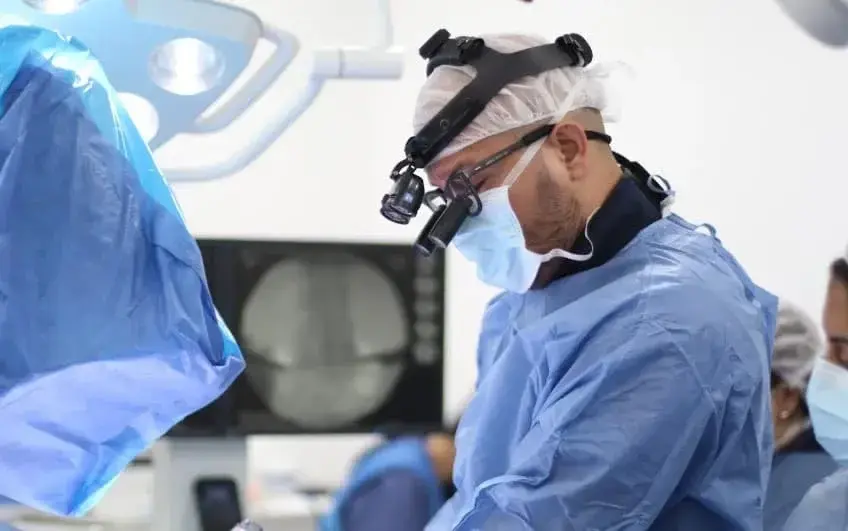
Demystifying spine surgery is the first step toward reducing anxiety. Modern spine surgery is a highly controlled, incredibly precise discipline where every single step is planned well before you enter the operating room.
Tailoring the Approach: Cervical vs. Lumbar Procedures
Your spine changes drastically from your neck down to your lower back, meaning a one-size-fits-all surgery does not exist. We customize our approach based on the exact location of your symptoms:
| Regional Focus | Clinical Objective | Common Symptoms Addressed |
|---|---|---|
| Neck Area | Cervical arthrodesis | Radiating arm pain, numbness, and severe weakness in the hands caused by nerve compression in the upper spine. |
| Lower Back | Lumbar spinal fusion | Deep, localized lower back pain and shooting sciatic leg pain that worsens with walking or standing. |
Advanced Techniques: ALIF, PLIF, and TLIF Explained
To access your spine safely, we select the surgical pathway that minimizes trauma to your surrounding muscles and tissues. Think of these as different doorways to reach the exact same room:
- Anterior Lumbar Interbody Fusion (ALIF): Reaching the spine from the front (through the abdomen). This protects your back muscles completely and allows for a larger supportive implant.
- Posterior Lumbar Interbody Fusion (PLIF): A traditional, highly reliable approach from the back, allowing direct visualization and decompression of pinched nerves.
- Transforaminal Lumbar Interbody Fusion (TLIF): An elegant approach from the side-back, which allows us to access the disc space while minimizing the retraction of vital nerve roots.
Precision Technology: The Hardware Securing Your Recovery in Bogotá
It is entirely natural to feel hesitant about having medical hardware placed in your body. However, modern spinal engineering relies on highly advanced materials engineered to work with your biology, not against it.
Spinal Fusion Instrumentation: Biocompatible Materials for Lasting Support
The internal support system we use is known as spinal fusion instrumentation. These components act as an internal splint, providing absolute rigidity so your bones can heal safely. We utilize premium, medical-grade components including:
- Pedicle screws and rods: Titanium or cobalt-chrome structures that lock the unstable vertebrae in perfect alignment.
- Interbody cages: Structural spacers made of advanced polymers (like PEEK) or porous titanium that replace the damaged disc, restoring your spine's natural height and taking the pressure off your nerves.
These materials are fully biocompatible, meaning your body accepts them seamlessly without allergic reactions, ensuring they remain safely in place for a lifetime.
The Science of Fusing Bone: Grafts and Gels
While hardware provides immediate stability, the permanent cure happens biologically. The hardware holds the spine still so that your body can grow new bone across the empty disc space. To stimulate this natural biological bridge, we utilize a bone graft for spinal fusion. Depending on your specific case, we may incorporate advanced bone graft substitutes / BMP (Bone Morphogenetic Protein), which utilize specialized proteins to actively signal your body’s cells to build solid, healthy bone faster and more reliably.
The award-winning procedure, recognized for its innovation, is within your reach.
Beyond Fusion: Sean’s Journey to Lasting Relief
While spinal fusion may be necessary for structural instability, artificial disc replacement can help preserve motion in younger, active patients. Sean’s story shows how this advanced procedure relieved years of chronic lower back pain while maintaining his natural mobility.
At SpineAx, international patients receive specialized spine care from the first virtual consultation to treatment planning, surgery, and post-operative follow-up. Whether the patient needs spinal fusion or a motion-preserving alternative, the team provides expert medical guidance, language support, and personalized assistance every step of the way.
The Path to Relief: Recovery and Life After Surgery
A successful outcome depends equally on what happens after you leave the operating room. Understanding the journey ahead removes the fear of the unknown.
What to Expect During the Spinal Fusion Recovery Time
Your healing process is a gradual journey of structural bonding. While every individual heals at their own pace, a realistic timeline for your spinal fusion recovery time generally follows this clinical path:
Days 1–3: Hospital Stay
- Early mobilization
- Pain management
Weeks 1–6: Home Recovery
- Gentle walking
- Incision healing
Months 3–6: Solid Fusion
- Bone fully bonds
- Return to normal activities
Adhering to strict post-operative care for spinal fusion—such as avoiding heavy lifting, twisting, or bending—during the first few weeks is crucial to protect the structural integrity of the construct while the early bone matrix forms.
Rehabilitation and Measuring the Spinal Arthrodesis Success Rate
Once the initial healing phase is secure, targeted physical therapy begins. Specialized spinal fusion rehabilitation exercises are introduced to safely rebuild core strength and support your new posture without overloading the surgical site.
When performed by experienced specialists, the long-term spinal arthrodesis success rate for pain relief and functional restoration is exceptionally high, typically ranging between 80% and 90% for well-indicated conditions. Ultimately, life after spinal arthrodesis is about expanding your boundaries again returning to the hobbies, walks, and family moments that chronic pain stole from you.
International Spine Care at SpineAx: From Virtual Consultation to Recovery
For many international patients, seeking spine care abroad can feel overwhelming. There are medical records to organize, imaging studies to review, travel questions to answer, and, most importantly, the need to feel confident about who will be guiding the treatment.
At SpineAx, the process is designed to make each step clearer, more personal, and medically focused from the very beginning. The journey starts with a virtual consultation, where patients can share their symptoms, previous diagnoses, MRI or X-ray images, and treatment history with the medical team before traveling.
Guided by Dr. Juan Carlos Pérez
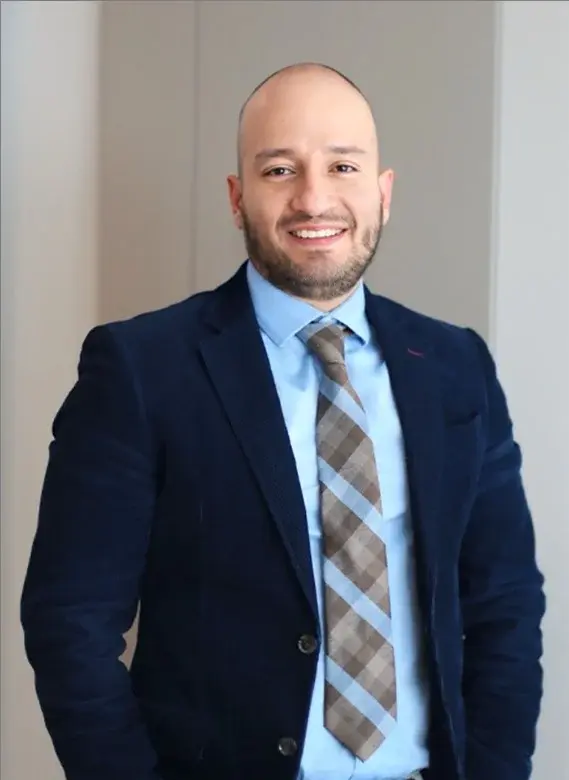
Dr. Juan Carlos Pérez leads the SpineAx approach with a focus on accurate diagnosis, personalized treatment planning, and clear communication with each patient. Rather than recommending the same solution for every case, the first priority is understanding the patient’s condition, lifestyle, pain level, mobility limitations, and previous treatments.
This is especially important for international patients, who need to know whether traveling for spine care is appropriate, what type of treatment may be recommended, and what the expected recovery process may involve.
| Step | What Happens | Why It Matters |
|---|---|---|
|
01
Virtual Consultation
The process begins online
|
During the virtual consultation, the SpineAx team reviews the patient’s case, including symptoms, medical history, and diagnostic images. This first step helps determine whether the patient may be a candidate for conservative care, interventional pain treatment, minimally invasive spine procedures, or spine surgery. | The goal is not only to evaluate the condition, but also to give the patient a clearer understanding of the possible next steps before making travel decisions. |
|
02
Personalized Treatment Planning
Guidance before traveling
|
After the initial evaluation, SpineAx provides guidance based on the patient’s diagnosis and individual needs. When treatment in Colombia is recommended, the team helps the patient understand the proposed medical plan, estimated timeline, pre-treatment requirements, and what to expect before arrival. | This planning stage allows international patients to prepare medical documents, coordinate travel, organize assistance if needed, and arrive with a clearer sense of the process ahead. |
|
03
Treatment at SpineAx
Specialized spine care in Colombia
|
Once the patient arrives, the medical team confirms the diagnosis, reviews the treatment plan, and performs any additional evaluations that may be necessary. Depending on the case, treatment may involve non-surgical pain management, minimally invasive procedures, or surgical care. | Throughout the process, the focus remains on safety, precision, and helping the patient return to daily life with a recovery plan that fits their condition. |
SpineAx Recovery: Support After Treatment
Care does not end after the procedure. SpineAx Recovery is designed to support patients during the healing phase, with guidance after treatment, follow-up recommendations, and recovery instructions that help patients understand what to do once they return home.
For international patients, this continued support is especially valuable. It helps create a bridge between treatment in Colombia and recovery in the patient’s home country, giving them a clearer plan for movement, follow-up, warning signs, and gradual return to activity.
A Clear Path for International Patients
From the first virtual consultation to treatment planning and recovery support, SpineAx gives international patients a structured path to specialized spine care. The process is designed to reduce uncertainty, improve communication, and help each patient make informed decisions about their health.
If you are considering spine treatment in Colombia, you can begin with a virtual consultation and have your case reviewed by the SpineAx team before planning your trip
Why Trust SpineAx with Your Spinal Health in Colombia?
Choosing where to undergo spinal surgery is a deeply personal decision, and at SpineAx, we combine elite neurosurgery with specialized spine surgery to offer you the safest, most precise care possible. Our multidisciplinary team focuses on meticulous, custom-tailored diagnostics to reduce procedural risks, while prioritizing minimally invasive spinal fusion techniques whenever clinically viable. By accessing the spine through tiny, localized pathways that protect your delicate back muscles from unnecessary trauma, we drastically minimize post-operative discomfort and accelerate your healing process. At SpineAx, we do not just treat structural disorders; we partner with you as a dedicated medical ally, leveraging advanced technology and true clinical expertise to safely and swiftly restore the active lifestyle you deserve.
Frequently Asked Questions About Spinal Arthrodesis
1. What is the fundamental difference between spinal arthrodesis and spinal fusion?
There is no difference in terms of the outcome. Spinal arthrodesis is the formal medical and surgical term for the procedure, derived from Greek words meaning «joining the joint.» Spinal fusion is simply the everyday, patient-friendly term used to describe the exact same process: permanently welding two or more vertebrae together to eliminate painful motion.
2. Will I lose all flexibility or be unable to bend over after a spinal fusion?
This is one of the most common fears, but the reality is quite different. Because the procedure is typically limited to one or two unstable segments, the remaining healthy joints of your spine will compensate for the fused area. Furthermore, because the surgery eliminates the severe mechanical pain that used to freeze your back, most patients find that their overall functional mobility and ability to perform daily movements improve significantly after recovery.
3. How do you determine if a patient needs cervical arthrodesis versus a lumbar spinal fusion?
The choice depends entirely on the anatomical source of your structural pathology and neurological symptoms. We perform a cervical arthrodesis when a patient suffers from severe disc herniations or bone spurs in the neck that compress nerves, causing radiating pain, numbness, or weakness down the arms and hands. Conversely, a lumbar spinal fusion is indicated when the instability is in the lower back, typically causing localized lower back pain and shooting sciatic nerve pain down the legs.
4. What are the specific spinal hardware materials left inside my body?
We utilize advanced, medical-grade spinal fusion instrumentation engineered to be 100% biocompatible, meaning your body will seamlessly accept them without any risk of rejection or allergic reaction. This internal support system generally consists of specialized interbody cages made of porous titanium or high-performance polymers (PEEK) to replace the damaged disc, which are then securely locked into place using robust pedicle screws and rods to ensure absolute structural stability from day one.
5. What exactly is a bone graft for spinal fusion, and where does it come from?
While the metal hardware stabilizes your back immediately, a permanent cure requires your body to grow solid bone across the joint. To trigger this natural biological process, we place a bone graft for spinal fusion in the disc space. Depending on your health profile, we may use your own local bone collected during the decompression phase, safe synthetic bone matrices, or advanced bone graft substitutes / BMP (Bone Morphogenetic Protein) to actively accelerate the natural bone-bonding process.
6. Who is the ideal candidate for a minimally invasive spinal fusion at SpineAx?
An ideal candidate is a patient with localized structural issues—such as degenerative disc disease, low-grade spondylolisthesis, or spinal stenosis—who has completed at least three to six months of conservative management (physical therapy, injections, medications) without experiencing lasting relief. During your clinical evaluation, our neurosurgical team analyzes your specific imaging to verify if your anatomy allows for a specialized, smaller-incision approach.
7. What is a realistic spinal fusion recovery time before returning to an office job?
While a full, solid bone fusion can take anywhere from three to six months to complete biologically, your day-to-day recovery progresses much faster. Most patients who work in a sedentary or office-based environment can safely return to light desk duties within 4 to 6 weeks post-surgery, provided they adhere to strict ergonomic adjustments and avoid prolonged, uninterrupted sitting.
8. What does immediate post-operative care for spinal fusion involve during the first month?
The first month is strictly dedicated to protecting the early healing process. Your post-operative care for spinal fusion revolves around a crucial rule: avoiding excessive bending, lifting objects heavier than a gallon of milk, or twisting your torso (the «BLT» restrictions). Your main physical activity during this initial phase will be short, frequent walks around your home or neighborhood to promote healthy circulation and prevent muscle stiffness.
9. Why is a structured program of spinal fusion rehabilitation exercises so critical?
Surgery fixes the mechanical instability, but targeted physical therapy restores your physical capability. Once your early imaging shows stable initial healing (usually around week 6), we introduce specialized spinal fusion rehabilitation exercises. This program focuses on safely strengthening your deep core, gluteal, and hip muscles, which relieves long-term stress on your spine and protects the adjacent spinal segments from future wear.
10. What can I realistically expect from life after spinal arthrodesis?
The ultimate clinical goal of life after spinal arthrodesis is a complete return to structural comfort and functional independence. Once full biological fusion is achieved, you can look forward to enjoying low-impact fitness, traveling, gardening, and participating in family activities completely free from the debilitating, unpredictable pain that is used to control your daily schedule.


